How to Trade Liquidity Sweeps
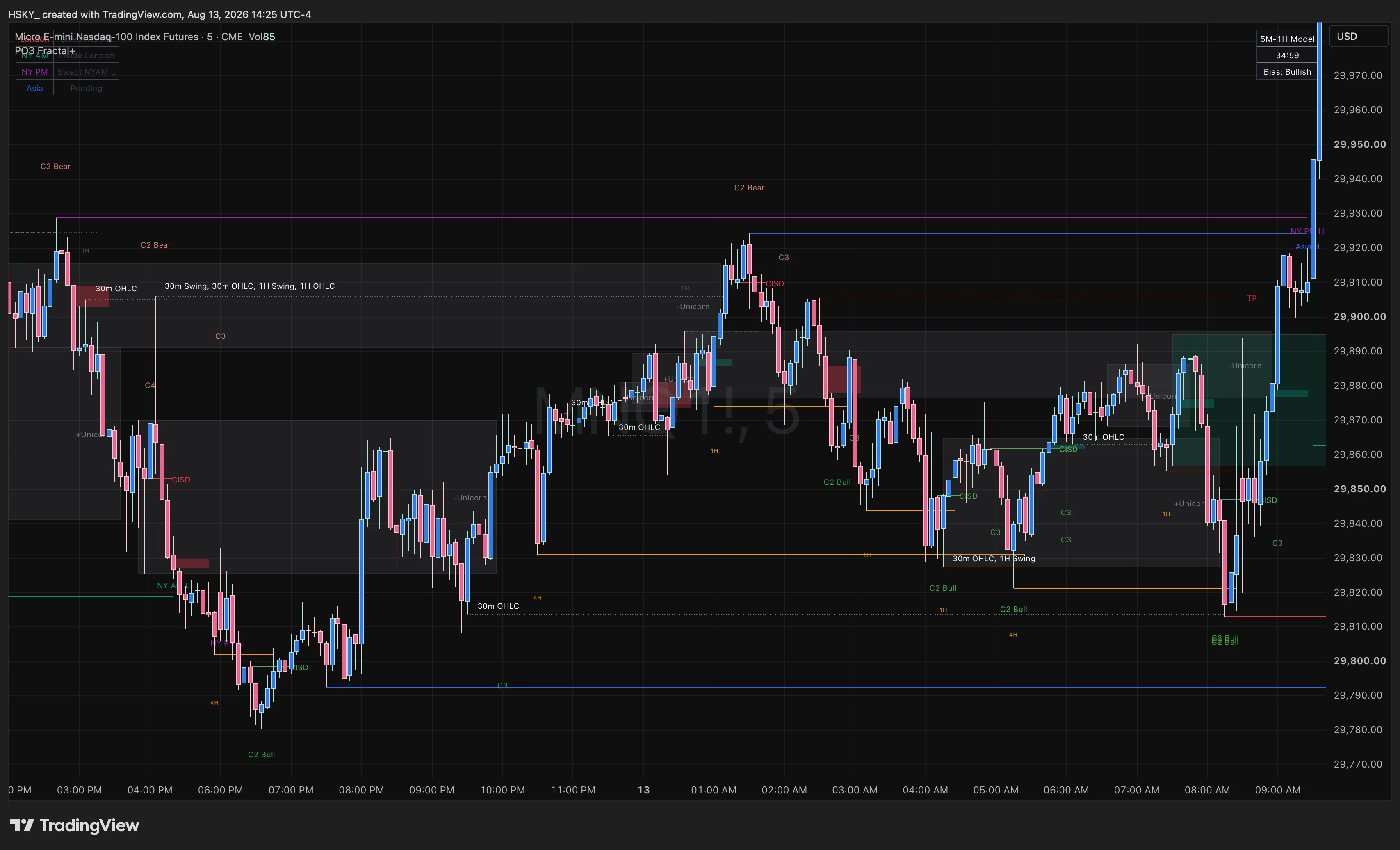
A liquidity sweep (also called a stop run or turtle soup) occurs when price extends beyond a key swing high or low — where the majority of retail stop losses are clustered — before reversing sharply in the opposite direction. Institutions engineer these sweeps to fill their large orders against trapped retail traders. The frustration most traders experience is entering short at the swing high just before it gets swept, becoming the liquidity themselves. The solution is to never enter at or before a key swing level — always wait for the sweep and reversal confirmation before entering.
Key Stat: Liquidity sweeps that are followed by a displacement candle closing back inside the prior range, with a Fair Value Gap, represent some of the highest probability entry setups in the ICT framework.
If you've ever entered a trade, placed your stop loss at the most logical swing high or low, watched the market tap your stop loss exactly, and then reverse immediately in your intended direction—you've been the victim of a liquidity sweep. In this guide, we'll teach you how to stop being the liquidity, and start trading the sweep.
What is a Liquidity Sweep?
Institutions need massive amounts of volume (liquidity) to enter their positions. They cannot simply hit "buy" or "sell" at market price.
To fill their massive orders, they must engineer liquidity.
They do this by pushing price just beyond obvious levels of retail support and resistance (such as relative equal highs or recent swing lows).
Retail traders place their stop losses in these obvious areas. When price breaks these levels, it triggers a cascade of retail stop losses (which are actually market orders), providing the exact liquidity the institutions need to enter their true, opposing positions.
How to Spot the Reversal
To trade a liquidity sweep, you must wait for the trap to spring. Do not trade the breakout; trade the failure of the breakout.
Here is the exact sequence to look for:
- Identify the Target: Locate a pool of liquidity, such as relatively equal highs or a prominent daily high/low.
- Wait for the Sweep: Price pushes aggressively past the target level.
- Look for the Rejection: Price immediately rejects and closes back inside the range. A wick past the level is the ultimate confirmation of a sweep.
- Enter the Trade: Look for a shift in market structure on a lower timeframe, ideally accompanied by an Order Block or FVG, and enter targeting the opposing liquidity pool.
The Predictive Power of Sweeps
Liquidity sweeps aren't just a subjective pattern — they are mathematically predictive when combined with structural shifts. Our analysis of 11,100 NQ trades using the CISD engine proved that trades initiated immediately following a structural sweep (PDH, PDL, or Killzone boundary) outperformed standard entries by a significant margin.
When a setup triggers without a sweep, you are guessing direction. When a setup triggers immediately after a sweep, you are trading alongside the engineered institutional volume.
Related Reading:
Understanding how liquidity concepts differ from standard retail concepts can be confusing. Read our guide on SMC vs ICT: What is the Difference? to clear up the methodology.
Never Get Trapped Again
HSKY Suite features advanced Liquidity Sweep Detection, automatically alerting you when retail traders are being trapped so you can trade the reversal.
Get HSKY Suite Today