What is a Fair Value Gap in Trading?
A Fair Value Gap (FVG) is a three-candle price imbalance where institutional algorithms moved so aggressively in one direction that no opposing liquidity existed — leaving a visible gap between the wick of candle one and the wick of candle three. Because markets are engineered to be efficient, price has a strong statistical tendency to retrace into this gap before continuing in the trend direction. The single biggest mistake traders make with FVGs is trading every gap they see — valid FVGs are confirmed only when they form after a liquidity sweep on a higher timeframe and align with the overall market structure.
Key Stat: FVGs that form on timeframes of 15 minutes or higher, within an established HTF trend, have a measurably higher probability of being respected than FVGs found on sub-5-minute charts in isolation.
If you've been exploring Smart Money Concepts (SMC) or ICT strategies, you've likely heard the term "Fair Value Gap" or FVG.
In this guide, we'll explain exactly what an FVG is, why it forms, and how you can use it to find high-probability trade setups.
The Definition of a Fair Value Gap
A Fair Value Gap occurs when there is a rapid surge in price that leaves an imbalance in the market.
It is formed by a three-candle sequence where the wicks of the first and third candles do not overlap, leaving a "gap" in the body of the second (middle) candle.
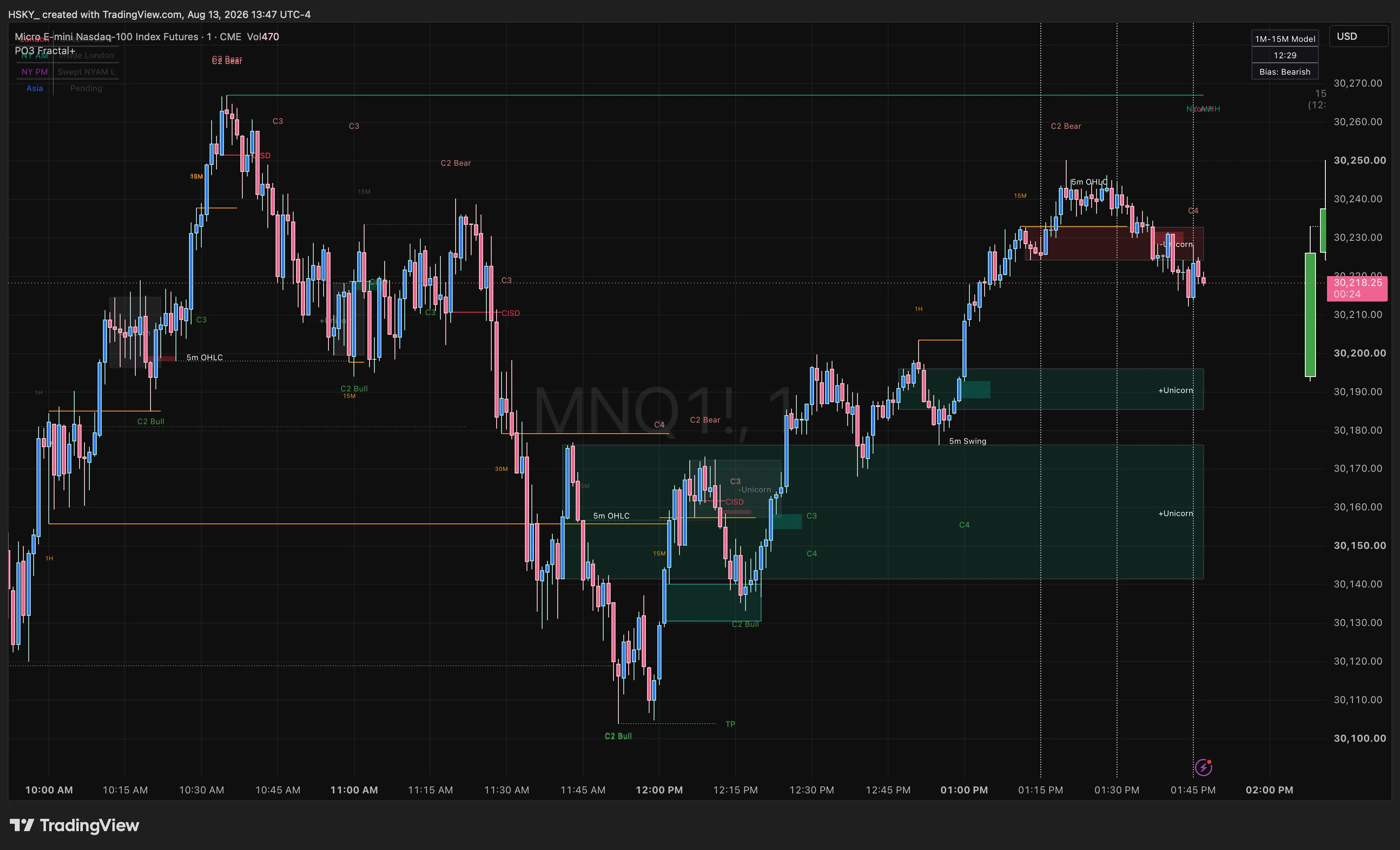
This gap represents inefficiency.
Because financial markets are designed to be efficient, price has a strong magnetic tendency to return to this gap to fill the missing orders.
How to Trade an FVG
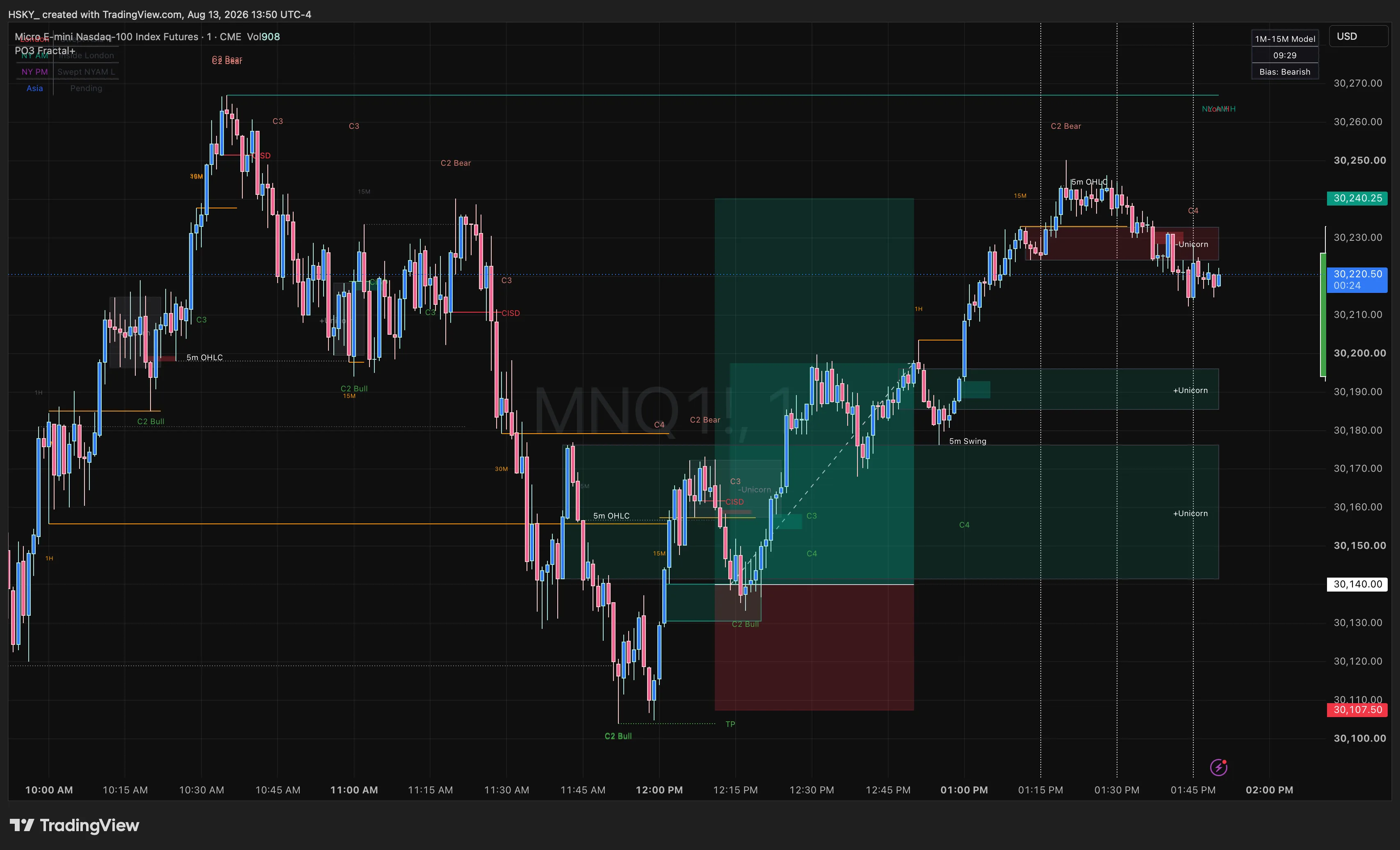
Traders use FVGs primarily as entry points or targets.
When price retraces back into an FVG, it often acts as strong support or resistance, offering an excellent risk-to-reward ratio for a trade.
The Inversion Fair Value Gap (IFVG) Confluence
What happens when an FVG fails to hold price? It becomes an Inversion Fair Value Gap (IFVG). Rather than a failed trade, an IFVG is a high-conviction momentum signature.
Statistical Proof of IFVG Power
Across 11,100 backtested CISD trades on NQ futures, the presence of an IFVG alongside a structural entry signal provided the single highest confluence boost of any technical indicator — increasing the win probability by an additional 12.4% compared to standard entries.
Related Reading:
FVGs are often found inside of larger institutional footprints. Read our guide on What is an Order Block in Trading? to understand how to pair these concepts together.
Automate FVG Detection
Don't want to scan the charts all day? HSKY Suite automatically detects high-probability Fair Value Gaps across all timeframes in real-time.
Get HSKY Suite Today